
4 min read
Who are the Laz?
“Dido merhaba! Our sea is our mirror, our mountains are our fortress, our language is our soul.”

The Laz (Lazuri: Lazepe) are a Kartvelian ethnic group indigenous to the southeastern coast of the Black Sea, primarily inhabiting the historical region known as Lazistan. Their homeland stretches along the lush, mountainous coastline of what is today northeastern Turkey (the provinces of Rize and Artvin) and a small part of western Georgia (the Adjara region, particularly the border village of Sarpi).
The Laz speak Lazuri, a South Caucasian language belonging to the Kartvelian language family, the same ancient family that includes Georgian, Mingrelian, and Svan. The Kartvelian languages are not related to any other known language family in the world, making every one of them, including Lazuri, extraordinarily valuable for understanding human linguistic diversity.
From Colchis to the Kingdom of Lazica
The origins of the Laz people trace back to the ancient Colchians, the inhabitants of Colchis, the mythological land of the Golden Fleece. By the 1st century AD, a distinct Laz political entity had emerged: the Kingdom of Lazica (known as Egrisi in Georgian sources), which at its height controlled a vast territory from modern Trabzon to Abkhazia, with its capital at Archaeopolis (modern Nokalakevi in western Georgia).
For centuries, the Laz were caught between the great empires of their time. The Byzantine and Sassanid (Persian) empires fought the devastating Lazic War (541–562 AD) largely on Lazican soil. The Laz were among the earliest converts to Christianity in the Caucasus, and their kingdom was an important center of Christian civilization before the Ottoman conquest of the 15th and 16th centuries gradually brought Islam to the region.
From Christianity to Islam
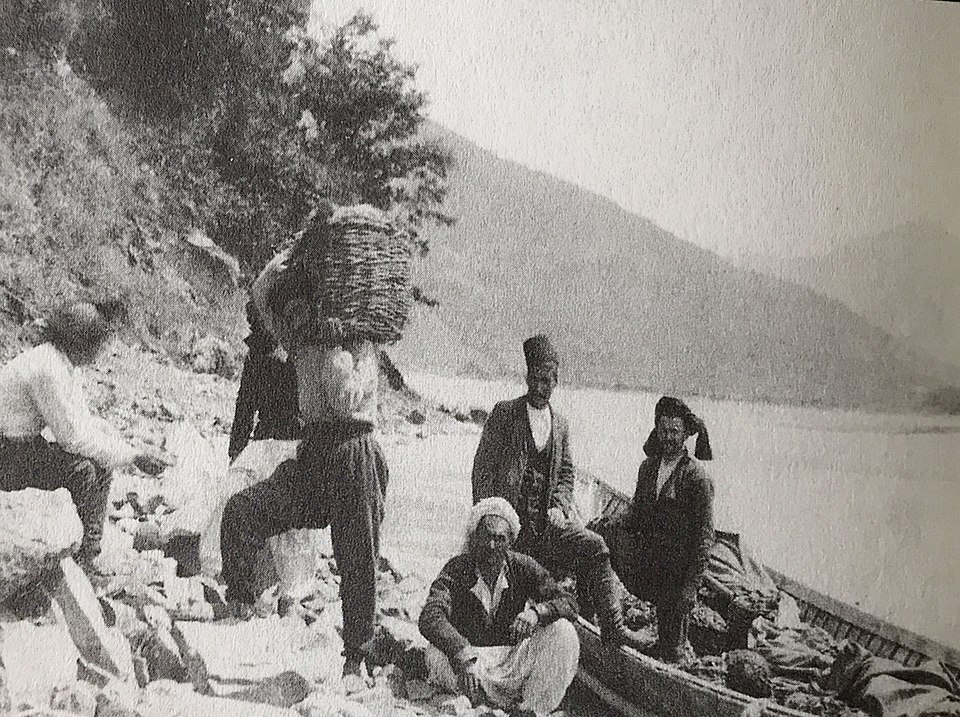
Today, the vast majority of Laz people are Sunni Muslims, though a small Christian Laz community persists in Georgia. The shift from Christianity to Islam, completed over several centuries of Ottoman rule, fundamentally altered the cultural orientation of the Laz, distancing them from their Georgian and Byzantine Christian past while integrating them into the broader Ottoman and later Turkish Muslim world.
How many Laz are there?
Estimating the total Laz population is difficult because Turkey does not collect census data on ethnicity. Scholars estimate that between 500,000 and 1,000,000 people in Turkey are of Laz descent. However, only an estimated 20,000 to 30,000 still speak the Laz language fluently. UNESCO classifies Lazuri as “definitely endangered”, meaning children no longer learn it as a mother tongue in the home. The vast majority of fluent speakers are over 40 years old, and without significant intervention, the language risks falling silent within a generation.
Music, dance and daily life
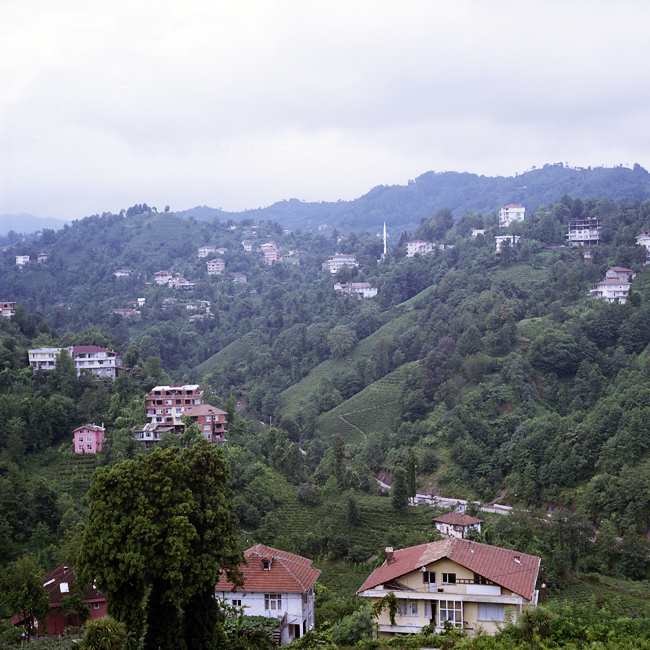
The Laz have a rich and distinctive cultural heritage. Their traditional music, featuring the tulum (goatskin bagpipe) and kemençe (three-stringed fiddle), is among the most recognizable in the Caucasus. The horon, their traditional circle dance performed at lightning speed with interlocked arms, is one of the fastest folk dances in the world. Laz architecture, cuisine, and oral traditions all reflect the unique environment of the eastern Black Sea coast: a land of steep green mountains, rushing rivers, ancient stone bridges, and terraced tea plantations.
The diaspora
The largest Laz diaspora communities are found in Istanbul (which may be home to more Laz than Lazistan itself), Ankara, Bursa, Düzce, and in Germany, where tens of thousands of Laz settled as part of the guest worker migrations of the 1960s and 1970s. In these urban settings, the pressures of assimilation and Turkish-language dominance have accelerated language loss, though cultural associations and social media have become important tools for preserving Laz identity.
A cultural revival
In recent decades, a growing cultural revival movement has emerged. Musicians like Kazım Koyuncu and Birol Topaloğlu have brought Laz music to national and international audiences. The Laz Institute (Lazuri Enstitü) has published dictionaries, textbooks, and literary works in Lazuri. And platforms like Lazepe.com are working to create a permanent digital record of Laz culture, history, and language before it is too late.
What comes next
The story of the Laz is the story of a people who have endured for millennia at the crossroads of empires, cultures, and religions. They have survived conquest, assimilation, and cultural suppression while maintaining a distinct identity rooted in their language, their music, their mountains, and their sea. The challenge now is whether that identity can survive the pressures of the modern world.