
3 min read
Religion Among the Laz People
“From the early light of Christianity to the call of the muezzin, the spiritual journey of the Laz reflects the great religious currents that have shaped the Black Sea and Caucasus regions.”
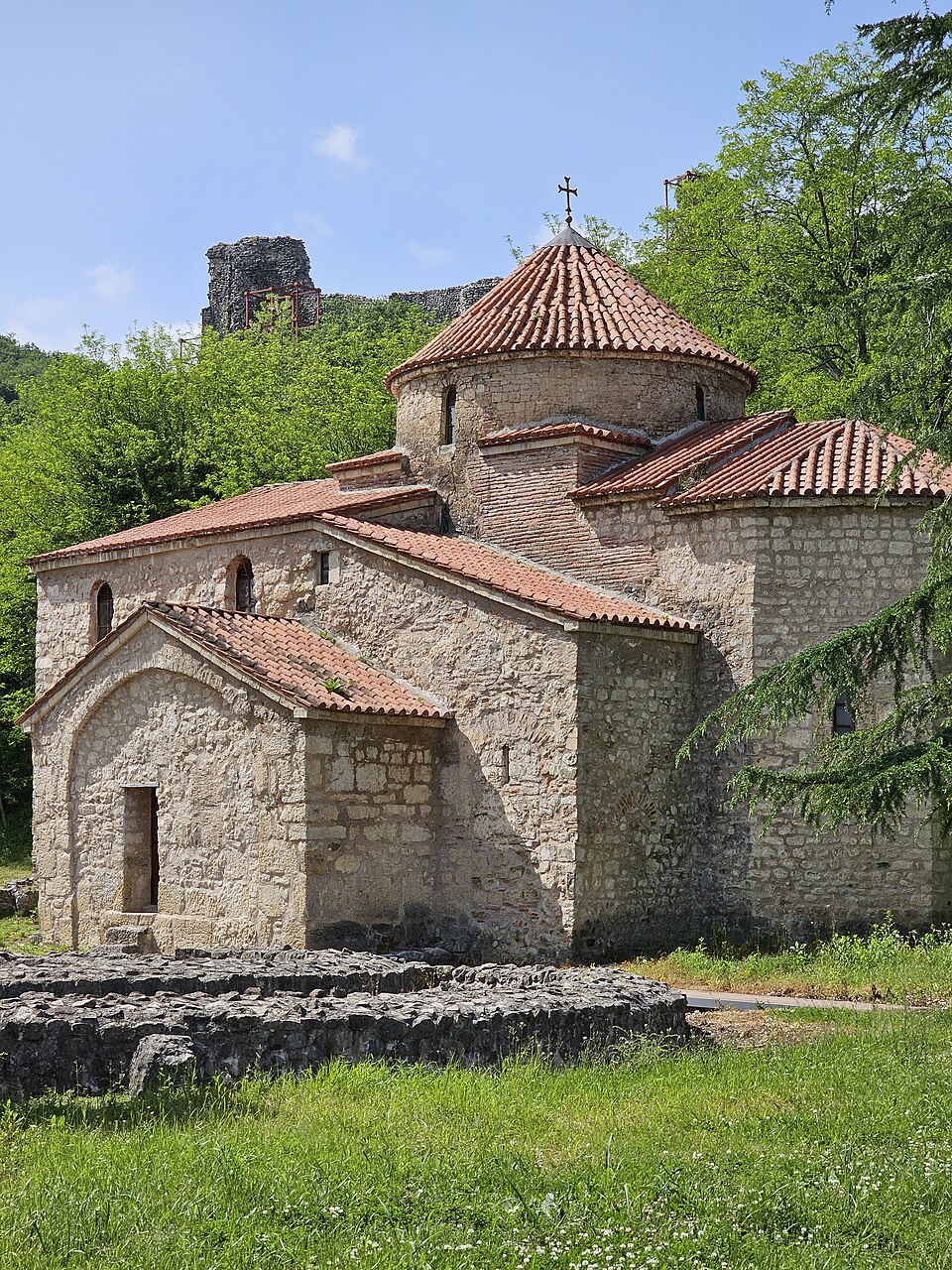
The religious history of the Laz people spans nearly two millennia and mirrors the broader transformations of the eastern Black Sea and Caucasus regions. From early adoption of Christianity to gradual conversion to Islam under Ottoman rule, the Laz spiritual identity has been shaped by the great empires and faiths that have passed through their homeland.
Early Christianity
The ancient Kingdom of Lazica (Egrisi) was one of the earliest states in the Caucasus to embrace Christianity. By the 4th century AD, the faith had become firmly established among the Laz, and the kingdom maintained close ecclesiastical ties with Constantinople and the wider Byzantine Christian world. Numerous churches and monasteries were built throughout Lazistan, some ruins of which can still be found hidden in the mountains of modern Artvin and Rize provinces.
The Laz played a significant role in the spread of Christianity throughout the western Caucasus. Their kingdom served as a bridge between the Byzantine Empire and the Christian kingdoms of Georgia, and Laz clergy participated in the great theological debates of the early Church. The ruins at Nokalakevi, the ancient capital of Lazica in modern Georgia, still bear witness to this Christian past.
Conversion to Islam
Following the Ottoman conquest of the eastern Black Sea coast in the 15th and 16th centuries, the Laz population gradually converted to Sunni Islam. This process was not sudden but unfolded over several centuries, driven by a combination of factors: economic incentives offered by the Ottoman administration, social pressure to conform to the ruling religion, tax advantages for Muslims, and freedom from the devshirme (child levy) system. By the 18th century, the conversion was largely complete.
The transition was pragmatic rather than coerced. Many Laz initially maintained syncretic practices, blending Islamic rituals with older Christian and even pre-Christian traditions. Over time, however, Islam became deeply woven into the fabric of Laz social life, particularly in rural communities where the mosque became the center of village gatherings.
Present Day
Today, the vast majority of Laz people are Sunni Muslims of the Hanafi school. Islam is deeply integrated into the social and cultural life of Laz communities, from daily prayers to wedding ceremonies and funeral rites. The faith coexists with strong local traditions, and Laz Islam tends to be moderate and community-oriented rather than politically radical.
A small but culturally significant exception exists in Georgia, where some Laz in the Adjara region have maintained their Christian faith or returned to Christianity in recent decades, particularly after the fall of the Soviet Union. The village of Sarpi, split between Turkey and Georgia at the border, symbolizes this dual religious heritage: Muslim Laz on the Turkish side, Christian Laz on the Georgian side, united by language and blood.
The religious landscape of the Laz people today is thus predominantly Muslim, shaped by centuries of Ottoman and Turkish influence, yet carrying within it the memory of a much older Christian civilization that once flourished along the shores of the Black Sea.