




Lazepe

Top Menu

  • History
  • Language & Literature
  • Music & Dance
  • News & Articles

Main Menu

  • Home
  • The Laz People
    • Who are the Laz?
    • Laz Tribes and Clans
    • Religion
    • Famous Laz People
      • Laz Musicians
      • Laz Historical Figures
      • Laz Writers & Academics
      • Laz Politicians & Military
  • Lazistan
    • Geography
    • Maps
    • History
    • Flag and Symbols
    • Demographics
    • Human Rights
  • Laz Language
    • Laz Alphabet
  • News & Articles
  • Interviews
  • Quiz
  • Contact
  • History
  • Language & Literature
  • Music & Dance
  • News & Articles

logo

Lazepe

  • Home
  • The Laz People
    • Who are the Laz?
    • Laz Tribes and Clans
    • Religion
    • Famous Laz People
      • Laz Musicians
      • Laz Historical Figures
      • Laz Writers & Academics
      • Laz Politicians & Military
  • Lazistan
    • Geography
    • Maps
    • History
    • Flag and Symbols
    • Demographics
    • Human Rights
  • Laz Language
    • Laz Alphabet
  • News & Articles
  • Interviews
  • Quiz
  • Contact
Language & Literature
Home›Language & Literature›Lazuri Nena: A Grammar of the Laz Language

Lazuri Nena: A Grammar of the Laz Language

By Lazepe
March 26, 2026
24
0
Share:
Illustration of Laz language and literature

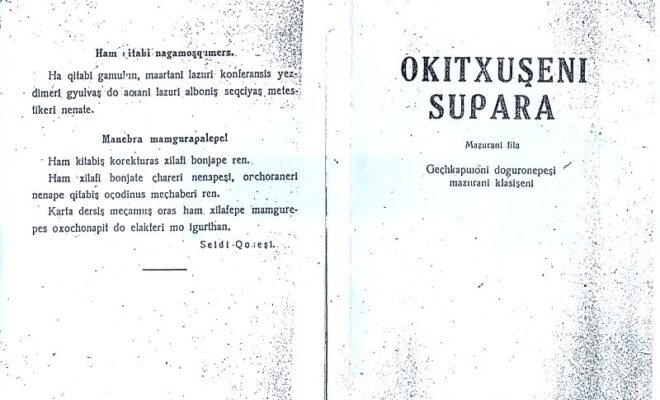
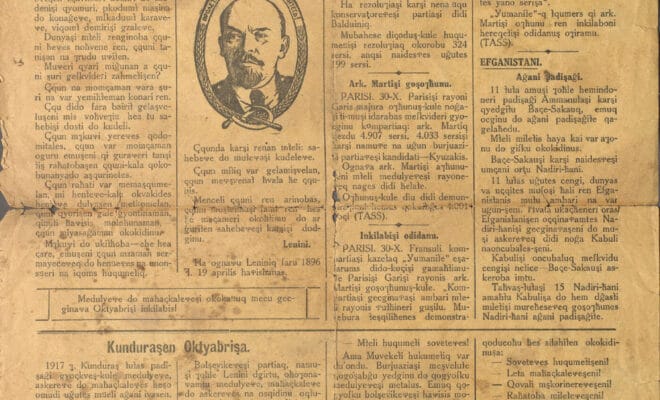
For most of its history, Lazuri (the Laz language) was an oral language, carried in songs, proverbs and everyday speech but rarely written down. Documenting its grammar has therefore been one of the most important tasks in the effort to keep the language alive.
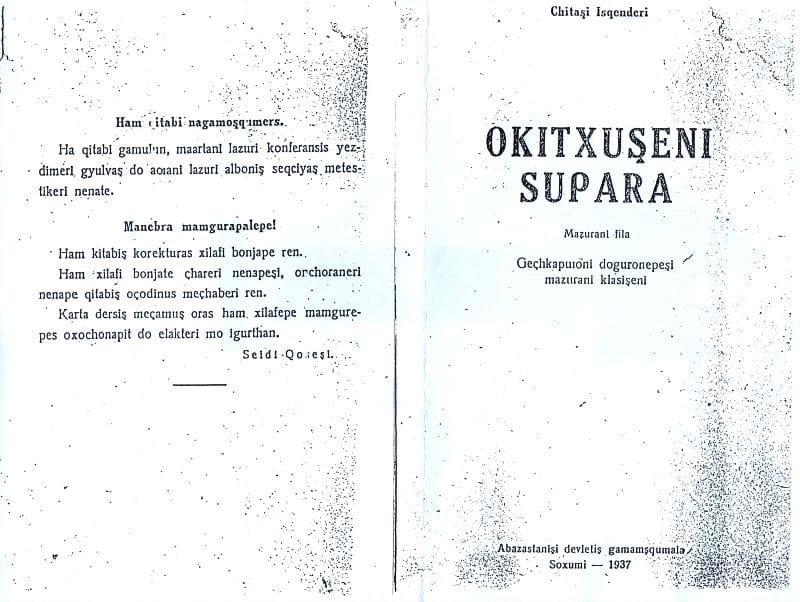
Table of Contents

Toggle
  • A landmark grammar
  • Building a written language

A landmark grammar

The most comprehensive study of the language to date is Lazuri Grameri / Lazca Gramer / Laz Grammar, written by the Laz scholar Ismail Avci Bucaklisi together with the Japanese linguist Goichi Kojima and published in 2008. Running to more than four hundred pages and presented in Laz, Turkish and English, it is the first full descriptive grammar of the language.

Their fieldwork also reshaped how scholars understand Lazuri itself: their analysis expanded the number of recognised Laz dialects from three to five, mapping the differences between the speech of areas such as Pazar, Ardesen, Arhavi and Hopa.

Building a written language

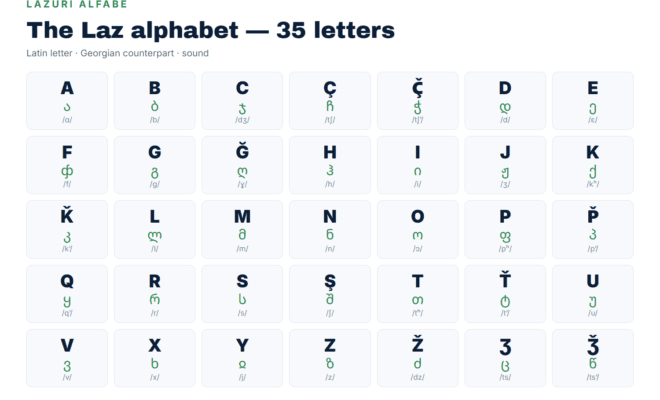
The grammar did not appear in isolation. Bucaklisi had earlier co-authored the first Laz-Turkish dictionary, and the modern Latin-based Laz alphabet developed by Wolfgang Feurstein in 1984 finally gave the language a stable way to be written. Dictionary, alphabet and grammar together form the foundation on which Laz can now be taught in schools and used in literature.

These works turned Lazuri from a purely spoken tongue into one that can be studied, standardised and passed on, an essential step for a language that UNESCO classifies as endangered.

Learn more: Introduction to the Laz Grammar (lazuri.com).

Previous Article

The Tuzcuoglu Rebellions: Laz Revolt Against the ...

Next Article

Mcita Murutskhi: The First Laz Newspaper (1929)

Share:

Related articles More from author

  • First page of Mcita Murutskhi, the first Laz newspaper, 1929
    Language & Literature

    Mcita Murutskhi: The First Laz Newspaper (1929)

    March 26, 2026
    By Lazepe
  • Karakovan tea plantations in Rize, Lazistan
    Language & Literature

    Introduction to the Laz Language (Lazuri)

    March 26, 2026
    By Lazepe

Leave a reply Cancel reply

  • Laz musician Birol Topaloglu playing the tulum bagpipe
    Music & Dance

    Traditional Tulum Music of Lazistan

  • Laz language instructors
    Interviews

    Ismail Avci Bucaklisi: A Voice for the Laz Language

  • Zilkale Castle in Camlihemsin, Rize, Lazistan
    News & Articles

    The Beauty of Lazistan: Landscapes of the Eastern Black Sea

Support Lazepe

Help keep the Laz language, music and history alive for the next generation.

Make a donation Every contribution counts

Follow us

Articles

News & Articles

Welcome to Lazepe.com

  • Laz peoples

    The Laz Diaspora: Communities Around the World

    By Lazepe
    March 26, 2026
  • Zilkale Castle in Camlihemsin, Rize, Lazistan

    The Beauty of Lazistan: Landscapes of the Eastern Black Sea

    By Lazepe
    March 26, 2026

Interviews

Interviews

Ismail Avci Bucaklisi: A Voice for the Laz Language

Our Logos

Lazepe Logo ColoredLazepe Logo White

About Lazepe

Lazepe.com is an independent Laz website that publishes news, articles, interviews, historical documents, literary works, photographs, music and videos about the Laz people.

Lazepe

Independent Laz website that publishes news, articles, interviews, historical documents, literary works, photographs, music and videos.

Subscribe to our Newsletter

Last Publications

  • June 6, 2026

    The Laz Migrations: Muhacir of the Black Sea

  • June 6, 2026

    John the Laz

  • June 6, 2026

    The Rize Hat Revolt of 1925: The Hamidiye and the Hangings

  • June 6, 2026

    The Conversion of the Laz to Islam

  • June 6, 2026

    The Christianization of Lazica

Most Commented

  • Muhacir refugees of the late Ottoman period
    History

    The Laz Migrations: Muhacir of the Black Sea

    By Lazepe
    June 6, 2026
    0
  • Firtina Valley in Rize, the heart of Lazistan
    News & Articles

    Welcome to Lazepe.com

    By Lazepe
    March 26, 2026
    0
  • Horon dancers on the Black Sea coast
    Music & Dance

    Laz Traditional Dances: The Horon

    By Lazepe
    March 26, 2026
    0
  • Kingdom of Lazica
    History

    The Kingdom of Lazica (Egrisi): A Forgotten Caucasian Kingdom

    By Lazepe
    March 26, 2026
    0
  • Privacy Policy
  • Donation
  • Contact
© 2026 Lazepe · Independent Laz culture, language & history project