


The Kemence: The Fiddle of the Black Sea
3 min read
Alongside the tulum, the second great instrument of Lazistan is the kemence (Lazuri: cilili), the slender bowed fiddle of the eastern Black Sea.
A bowed fiddle like no other
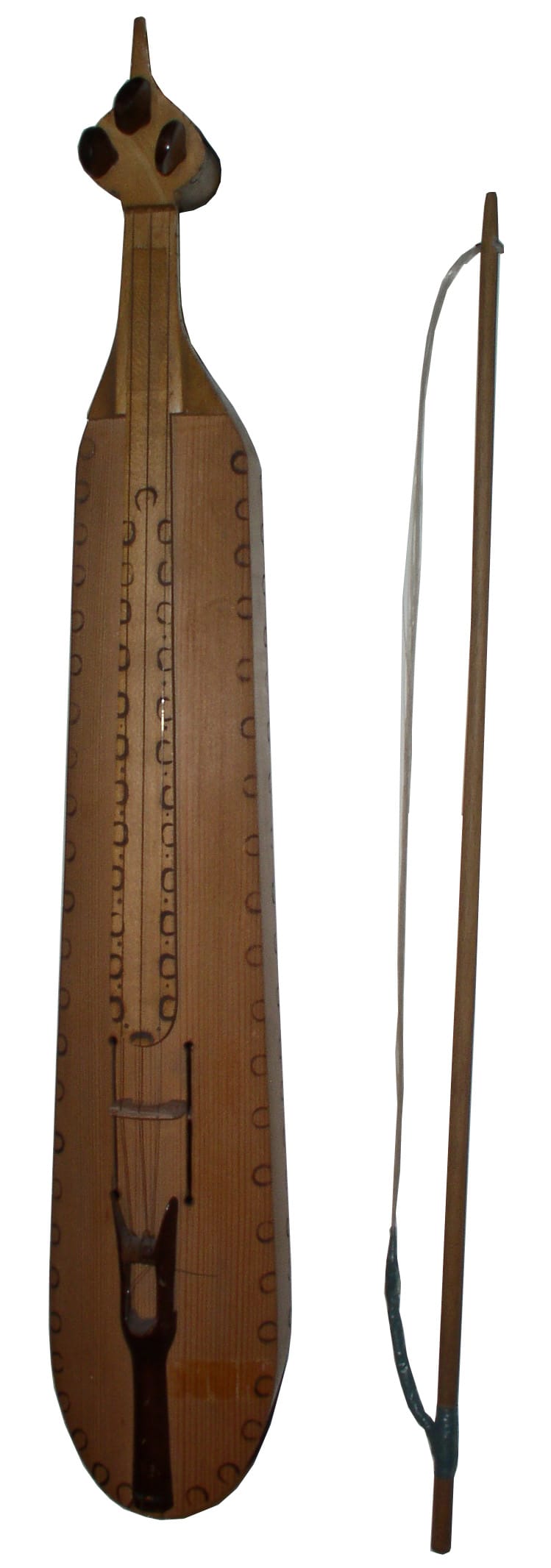
The Black Sea kemence is instantly recognisable by its narrow, bottle-shaped body and long neck, carved most often from a single piece of plum wood, with a soundboard of pine or fir. It has three strings, usually tuned in fourths, and is held upright on the knee or in front of the body and played with a short bow. Its bright, nasal, slightly buzzing tone is the voice of countless Black Sea melodies.
Shared across the coast
The instrument is played by the Laz, the Pontic Greeks (who call it the lyra) and the wider Black Sea population. Its history reaches back to the Byzantine era, and the name itself comes from a Persian word meaning “little bow.” A skilled kemence player (kemenceci) is still a respected figure in Laz communities.
The engine of the horon
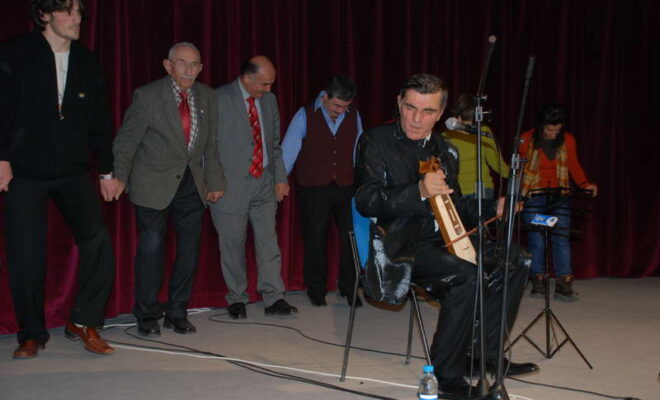
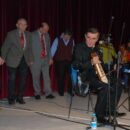
More than a concert instrument, the kemence drives the horon. Its relentless, repeating figures set the tempo for the dancers, often together with the tulum. Musicians such as Birol Topaloglu have worked to record and preserve this repertoire for new generations.
How it is made
The body and neck are usually carved from a single block, most often plum, though mulberry and juniper are also used, with a thin soundboard of pine or fir glued over the front. Two small sound holes flank the strings. Because the whole instrument comes from one piece of wood rather than assembled ribs, its tone depends heavily on the maker’s choice of timber and on how thin the soundboard is worked.
How it is played
Unlike a violin, the kemence is held upright — resting on the knee when seated, or held against the chest when standing, which is how it is played at weddings and in the street. The bow is short. Players commonly stop two strings at once, producing the parallel intervals that give Black Sea music its distinctive harmonic edge, and the instrument is rarely played quietly.
A regional instrument, not only a Laz one
The same fiddle is played along the whole eastern coast: by the Laz, by the Hemshin, by Turkish-speaking communities of Trabzon and Rize, and by the Pontic Greeks, who took it with them to Greece after 1923 and still call it the lyra. Its name comes from Persian kamanche, “little bow.” Treating it as the property of any one of these groups misreads a shared coastal culture.
Instrument photo: @rent / Wikimedia Commons, CC BY-SA 3.0