



Lazepe

Top Menu

  • History
  • Language & Literature
  • Music & Dance
  • News & Articles

Main Menu

  • Home
  • The Laz People
    • Who are the Laz?
    • Laz Tribes and Clans
    • Religion
    • Famous Laz People
      • Laz Musicians
      • Laz Historical Figures
      • Laz Writers & Academics
      • Laz Politicians & Military
  • Lazistan
    • Geography
    • Maps
    • History
    • Flag and Symbols
    • Demographics
    • Human Rights
  • Laz Language
    • Laz Alphabet
  • News & Articles
  • Interviews
  • Quiz
  • Contact
  • History
  • Language & Literature
  • Music & Dance
  • News & Articles

logo

Lazepe

  • Home
  • The Laz People
    • Who are the Laz?
    • Laz Tribes and Clans
    • Religion
    • Famous Laz People
      • Laz Musicians
      • Laz Historical Figures
      • Laz Writers & Academics
      • Laz Politicians & Military
  • Lazistan
    • Geography
    • Maps
    • History
    • Flag and Symbols
    • Demographics
    • Human Rights
  • Laz Language
    • Laz Alphabet
  • News & Articles
  • Interviews
  • Quiz
  • Contact
History
Home›History›The Rize Attack

The Rize Attack

By Lazepe
March 26, 2026
33
0
Share:
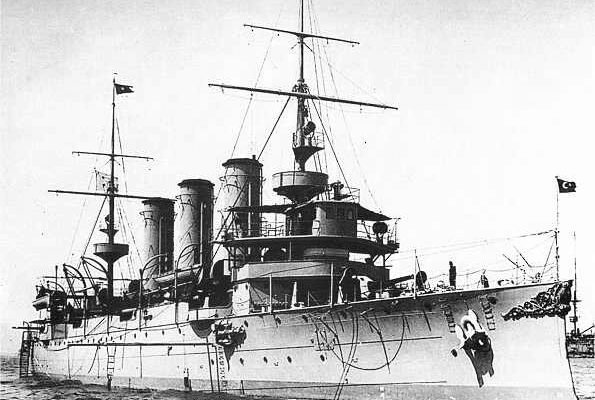
The Ottoman cruiser Hamidiye

Table of Contents

Toggle
  • The Rize Attack of 1547: Ottoman Conquest and the Fall of Lazistan
    • Background: Lazistan Before the Ottomans
    • The Ottoman Campaign Against Rize
    • Aftermath and Consequences
    • Resistance and Adaptation
    • Legacy

The Rize Attack of 1547: Ottoman Conquest and the Fall of Lazistan

The history of the Laz people is marked by centuries of resistance, adaptation, and survival. Among the most significant and traumatic events in Laz collective memory is the Ottoman conquest of the Rize region in the mid-16th century, a pivotal moment that fundamentally transformed the political, religious, and cultural landscape of Lazistan forever.

Background: Lazistan Before the Ottomans

Before the Ottoman expansion into the eastern Black Sea coast, the Laz people had maintained varying degrees of autonomy for centuries. Following the decline of the ancient Kingdom of Lazica (Egrisi) in the 7th century, the region had passed through Byzantine, Georgian, and Trebizond Empire control. The Empire of Trebizond (1204–1461), a Greek successor state of Byzantium, governed much of the eastern Black Sea coast, including areas inhabited by the Laz. During this period, the Laz remained predominantly Orthodox Christian, with deep ties to both Byzantine and Georgian ecclesiastical traditions.

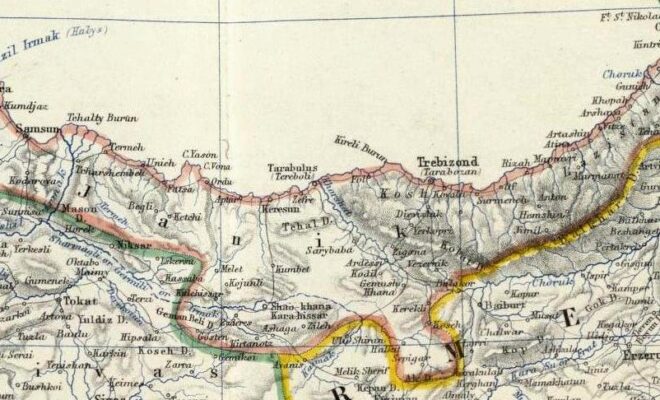
The fall of the Empire of Trebizond to Sultan Mehmed II in 1461 brought the western portions of the Black Sea coast under Ottoman control. However, the mountainous eastern regions, including the heartland of the Laz around modern Rize and Artvin, proved far more difficult to subdue. The rugged terrain, fierce local resistance, and the region’s distance from Ottoman power centers allowed Laz communities to maintain significant autonomy even as the empire expanded around them.

The Ottoman Campaign Against Rize

The Ottoman campaign to fully subjugate the Rize region intensified in the 1540s under Sultan Suleiman the Magnificent. The strategic importance of the eastern Black Sea coast, as a corridor to the Caucasus and a potential route for enemies approaching from the east, made its complete incorporation into the empire a military priority.

In 1547, Ottoman forces launched a major military campaign against the fortified Laz settlements of the Rize coast and its mountainous hinterland. The attack targeted local Laz lords (derebey) who had resisted Ottoman authority and continued to operate semi-independently. The campaign was brutal: villages were burned, fortifications were destroyed, and local leaders who refused to submit were killed or exiled.

The Laz defenders, though vastly outnumbered, mounted fierce resistance from their mountain strongholds. The steep terrain and dense forests of the region favored defensive warfare, and Ottoman forces struggled to penetrate the interior valleys. However, Ottoman naval superiority along the Black Sea coast allowed them to blockade Laz ports and cut off potential reinforcements or escape routes by sea.

Aftermath and Consequences

The fall of Rize and the surrounding Laz territories had profound and lasting consequences:

  • Loss of Political Autonomy: The Laz lost their remaining semi-independent status and were fully incorporated into the Ottoman administrative system. Local Laz lords were either co-opted into the Ottoman hierarchy or replaced by appointed officials.
  • Gradual Islamization: Perhaps the most significant long-term consequence was the gradual conversion of the Laz from Christianity to Islam. This process took several centuries (roughly from the 16th to the 18th century) and was driven by a combination of economic incentives, social pressure, and the administrative advantages of being Muslim in the Ottoman system. Tax exemptions, access to positions of power, and freedom from the devshirme (child levy) system all encouraged conversion.
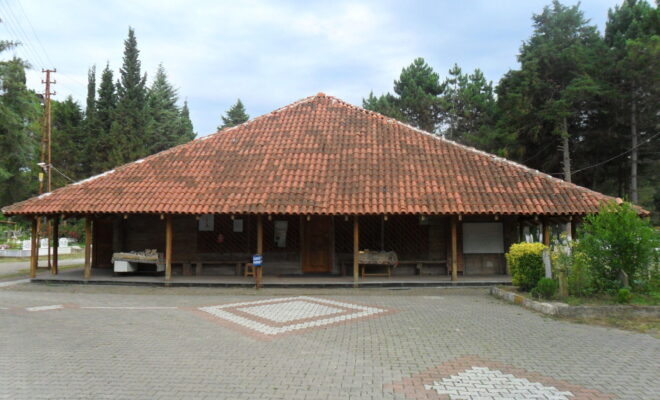
  • Cultural Transformation: While the Laz maintained their language and many cultural traditions, the shift from Christianity to Islam fundamentally altered their cultural orientation. Churches were converted to mosques, Christian festivals were replaced by Islamic ones, and the Laz’s historical connections to the Georgian and Byzantine Christian worlds gradually faded.
  • Destruction of Historical Sites: Many Laz churches, monasteries, and fortifications were destroyed or fell into disrepair following the conquest. The ruins of these structures, scattered throughout the mountains of Rize and Artvin, remain silent witnesses to the Laz people’s Christian past.

Resistance and Adaptation

Despite the conquest, the Laz did not simply submit. Throughout the Ottoman period, Laz communities were known for their fierce independence and occasional rebellions against central authority. The mountainous terrain continued to provide a natural buffer against complete state control, and Laz communities maintained significant local autonomy in practice, even as they nominally accepted Ottoman sovereignty.

The Laz also adapted to the new political reality by leveraging their maritime skills and military prowess. Laz sailors and soldiers became valued assets of the Ottoman military, particularly in the Black Sea fleet. Many Laz rose to positions of prominence within the Ottoman system, demonstrating the pragmatic adaptability that has characterized the Laz people throughout their history.

Legacy

The Ottoman conquest of Rize and the subsequent transformation of Laz society remains a complex and sensitive topic. For some Laz, it represents a traumatic loss of independence and cultural identity. For others, it is simply a chapter in the long history of a people who have survived and adapted through countless upheavals. What is undeniable is that the events of the 16th century set in motion changes that continue to shape Laz identity to this day, from their predominantly Muslim faith to their complex relationship with the Turkish state and their Georgian cultural cousins across the border.

Understanding the Rize attack and its aftermath is essential to understanding the modern Laz people: a community that carries within it the memory of an ancient Christian kingdom, the reality of centuries of Ottoman and Turkish integration, and the enduring spirit of a people who refuse to disappear.

Next Article

Introduction to the Laz Language (Lazuri)

Share:

Related articles More from author

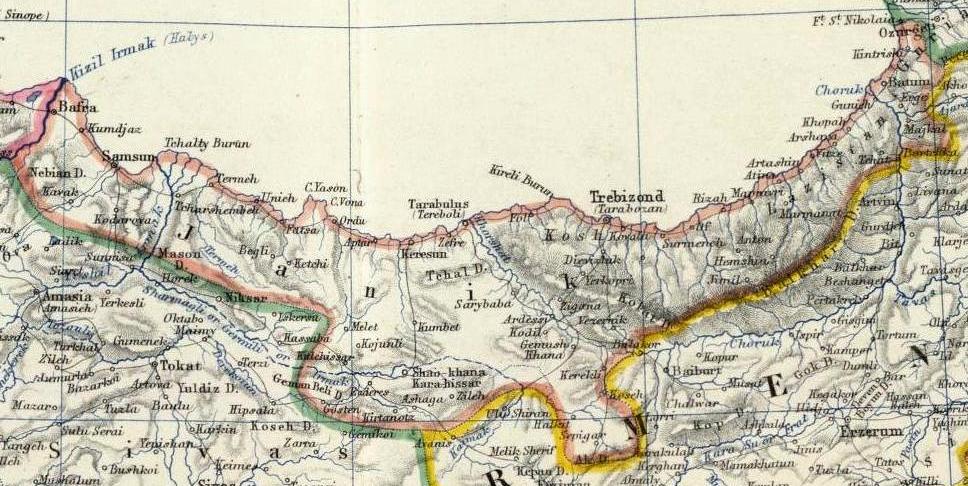
  • 1861 map of the eastern Black Sea and Transcaucasia
    History

    The Sanjak of Lazistan: An Ottoman Province Named After the Laz

    June 6, 2026
    By Lazepe
  • The Ottoman cruiser Hamidiye
    History

    The Rize Hat Revolt of 1925: The Hamidiye and the Hangings

    June 6, 2026
    By Lazepe
  • Map of the Tuzcuoglu rebellion against the Ottomans
    History

    The Tuzcuoglu Rebellions: Laz Revolt Against the Ottomans (1814-1834)

    March 26, 2026
    By Lazepe
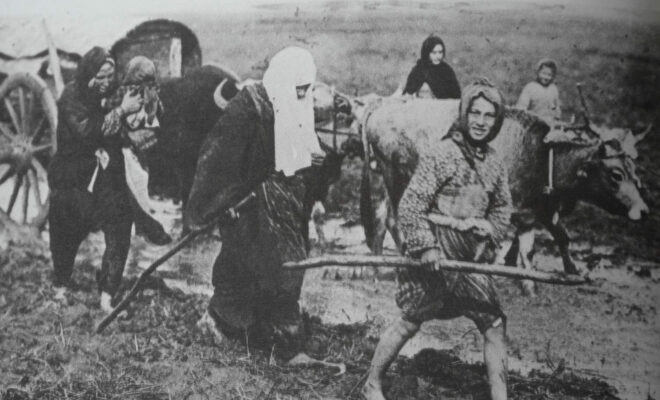
  • Muhacir refugees of the late Ottoman period
    History

    The Laz Migrations: Muhacir of the Black Sea

    June 6, 2026
    By Lazepe
  • Ruins of the Petra fortress in Lazica
    History

    The Lazic War (541-562): Byzantium and Persia Fight for Lazica

    June 6, 2026
    By Lazepe
  • Kingdom of Lazica
    History

    The Kingdom of Lazica (Egrisi): A Forgotten Caucasian Kingdom

    March 26, 2026
    By Lazepe

Leave a reply Cancel reply

  • Ruins of Nokalakevi, ancient capital of the Kingdom of Lazica
    Famous Laz PeopleLaz Historical Figures

    King Gubazes II of Lazica

  • Okitxuseni Supara, a Laz-language reading book
    Famous Laz PeopleLaz Writers & Academics

    Wolfgang Feurstein

  • Kazim Koyuncu
    Famous Laz PeopleLaz Musicians

    Kazım Koyuncu

Follow us

Articles

News & Articles

Welcome to Lazepe.com

  • Laz peoples

    The Laz Diaspora: Communities Around the World

    By Lazepe
    March 26, 2026
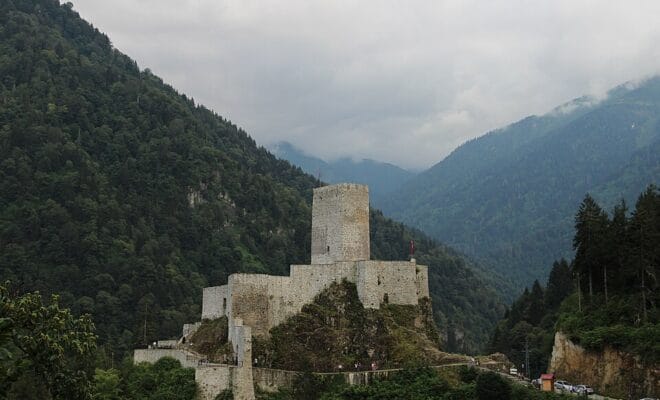
  • Zilkale Castle in Camlihemsin, Rize, Lazistan

    The Beauty of Lazistan: Landscapes of the Eastern Black Sea

    By Lazepe
    March 26, 2026

Interviews

Interviews

Ismail Avci Bucaklisi: A Voice for the Laz Language

Our Logos

Lazepe Logo ColoredLazepe Logo White

About Lazepe

Lazepe.com is an independent Laz website that publishes news, articles, interviews, historical documents, literary works, photographs, music and videos about the Laz people.

Lazepe

Independent Laz website that publishes news, articles, interviews, historical documents, literary works, photographs, music and videos.

Subscribe to our Newsletter

Last Publications

  • June 6, 2026

    The Laz Migrations: Muhacir of the Black Sea

  • June 6, 2026

    John the Laz

  • June 6, 2026

    The Rize Hat Revolt of 1925: The Hamidiye and the Hangings

  • June 6, 2026

    The Conversion of the Laz to Islam

  • June 6, 2026

    The Christianization of Lazica

Most Commented

  • Muhacir refugees of the late Ottoman period
    History

    The Laz Migrations: Muhacir of the Black Sea

    By Lazepe
    June 6, 2026
    0
  • Firtina Valley in Rize, the heart of Lazistan
    News & Articles

    Welcome to Lazepe.com

    By Lazepe
    March 26, 2026
    0
  • Horon dancers on the Black Sea coast
    Music & Dance

    Laz Traditional Dances: The Horon

    By Lazepe
    March 26, 2026
    0
  • Kingdom of Lazica
    History

    The Kingdom of Lazica (Egrisi): A Forgotten Caucasian Kingdom

    By Lazepe
    March 26, 2026
    0
  • Privacy Policy
  • Donation
  • Contact
© 2026 Lazepe · Independent Laz culture, language & history project