The Ottoman Conquest of Lazistan
4 min read
The Laz homeland did not fall to the Ottomans in a single battle. Its conquest was a process spread across almost a century, and it reached the southern and northern halves of Lazistan at very different moments.
Before the Ottomans: the Empire of Trebizond
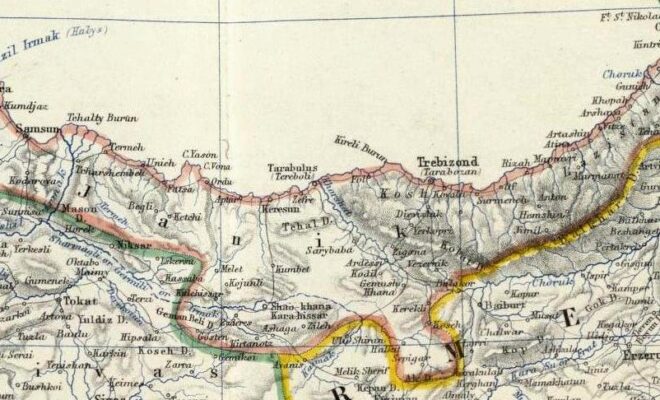
After the decline of the ancient Kingdom of Lazica the eastern Black Sea coast passed through Byzantine and Georgian hands. From 1204 the Empire of Trebizond, a Greek successor state of Byzantium, governed much of the coastline, including the districts where the Laz lived. Under Trebizond the Laz remained Orthodox Christians, tied to both the Byzantine and the Georgian ecclesiastical worlds, while the mountain valleys kept a large measure of practical independence.
1461: the fall of Trebizond
In 1461 Sultan Mehmed II took Trebizond and extinguished the last Greek state on the Black Sea. With it, the coast as far east as Rize came under Ottoman authority. This is the moment the southern Laz lands entered the empire. What followed there was not a single conquest but a slow consolidation, as Ottoman administration worked its way up valleys whose terrain favoured whoever already lived in them.
1547: the northern Laz districts
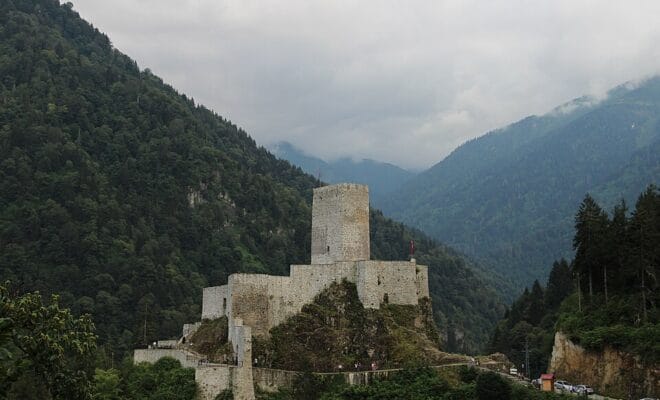
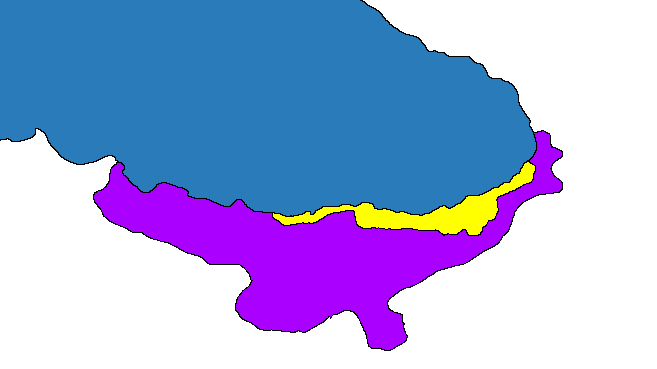
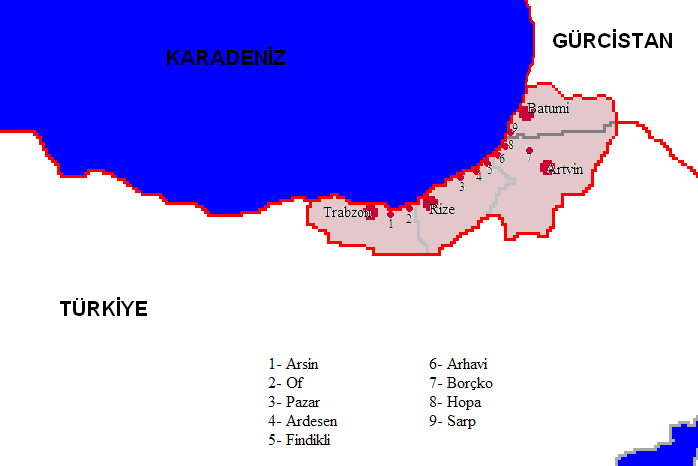
The northern edge of the Laz country held out far longer. The districts around Gonio and Batumi, at the mouth of the Coruh river, lay within the orbit of the Georgian principality of Guria. During the reign of Suleiman the Magnificent, in the campaigns of 1547, Ottoman forces took Gonio and the surrounding coast, bringing the last major Laz-inhabited districts under Ottoman rule. From that point the whole of Lazistan, from Rize to Batumi, lay inside a single empire, and would remain so until Russia annexed Batumi in 1878.
Lazistan inside the Ottoman system
The Laz lords, the derebey or valley lords, were not simply swept aside. Many were absorbed into the Ottoman order, holding local authority in the sultan’s name, while the steep terrain continued to limit how far central power could actually reach. Centuries later the region was formalised as the Sanjak of Lazistan, a province that carried the name of the Laz within the vilayet of Trebizond.
The long conversion to Islam
The deepest change was religious, and it came slowly rather than at sword-point. The conversion of the Laz to Islam unfolded across roughly the 16th to the 18th centuries, driven by a combination of factors: economic incentives, the social standing of the Muslim community, and the administrative advantages of being Muslim in the Ottoman system. Tax arrangements that favoured Muslims, access to office, and exemption from the devshirme levy all pushed in the same direction.
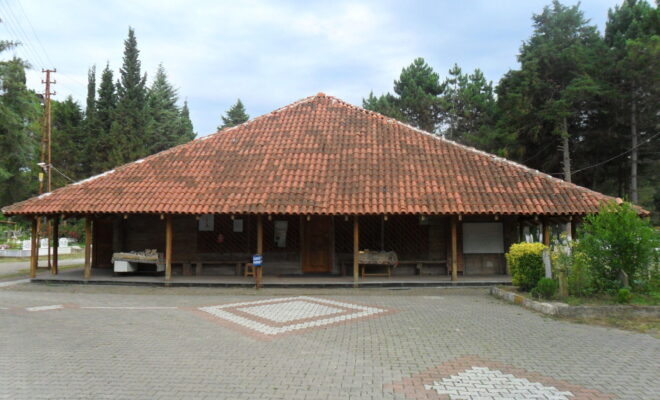
The Laz kept their language and much of their daily culture, but the shift reoriented them. Churches gave way to mosques, the calendar of festivals changed, and the old connections to the Georgian and Byzantine Christian worlds faded. Ruined churches and chapels scattered through the mountains of Rize and Artvin remain the visible trace of that earlier world.
Resistance and adaptation
Ottoman sovereignty did not mean docility. Laz communities were known throughout the period for their independence and for periodic revolt against central authority, most famously the Tuzcuoglu rebellions of 1814 to 1834. The mountains remained a natural check on state control, and local autonomy persisted in practice long after it had ended on paper.
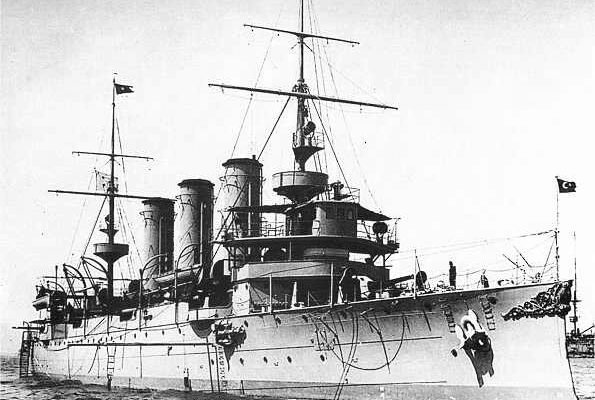
At the same time the Laz turned their skills to the empire’s advantage. Laz sailors and soldiers were valued in the Ottoman forces, particularly in the Black Sea fleet, and Laz families rose to prominence within the imperial system. That combination of resistance and pragmatic adaptation runs throughout the period.
Legacy
The incorporation of Lazistan into the Ottoman Empire set in motion changes that still shape Laz identity: a predominantly Muslim faith, a long entanglement with the Turkish state, and a border that since 1878 has separated the Laz of Turkey from their cousins in Georgia. Understanding this period is essential to understanding the modern Laz, a community that carries the memory of an ancient Christian kingdom alongside centuries of Ottoman and Turkish integration.
Sources
- Empire of Trebizond on Wikipedia
- Gonio fortress on Wikipedia
- Sanjak of Lazistan on Wikipedia
- Laz people on Wikipedia