




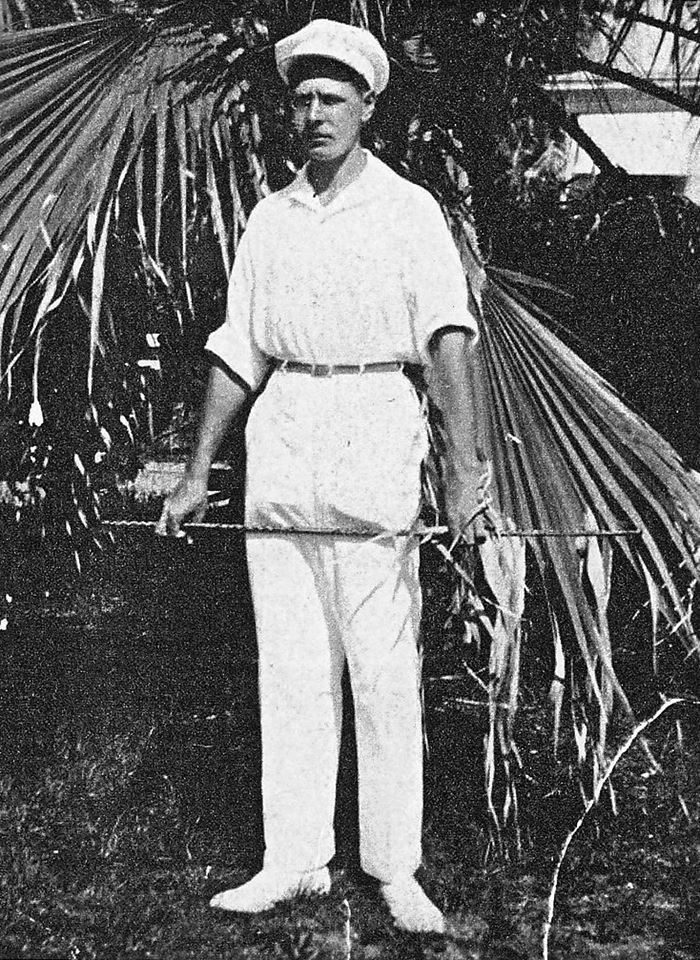
İskender Tzitashi (Chitashi)
3 min read
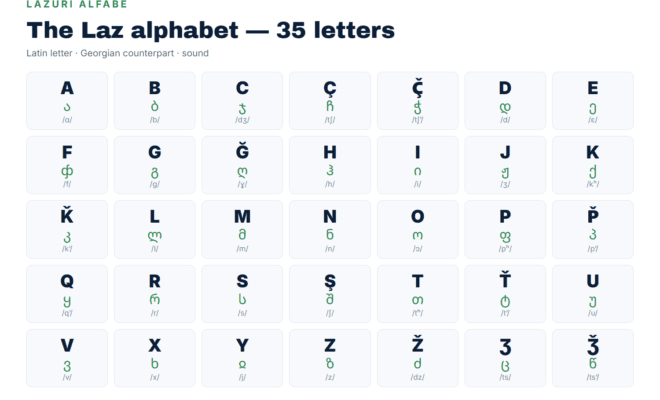
İskender Tzitashi (also written Chitashi or Tsitashi) was a Laz intellectual and linguist active in the Soviet Union during the early 20th century. He is credited with creating the first Laz alphabet in 1929, a historic achievement that marked the beginning of written Laz literature.
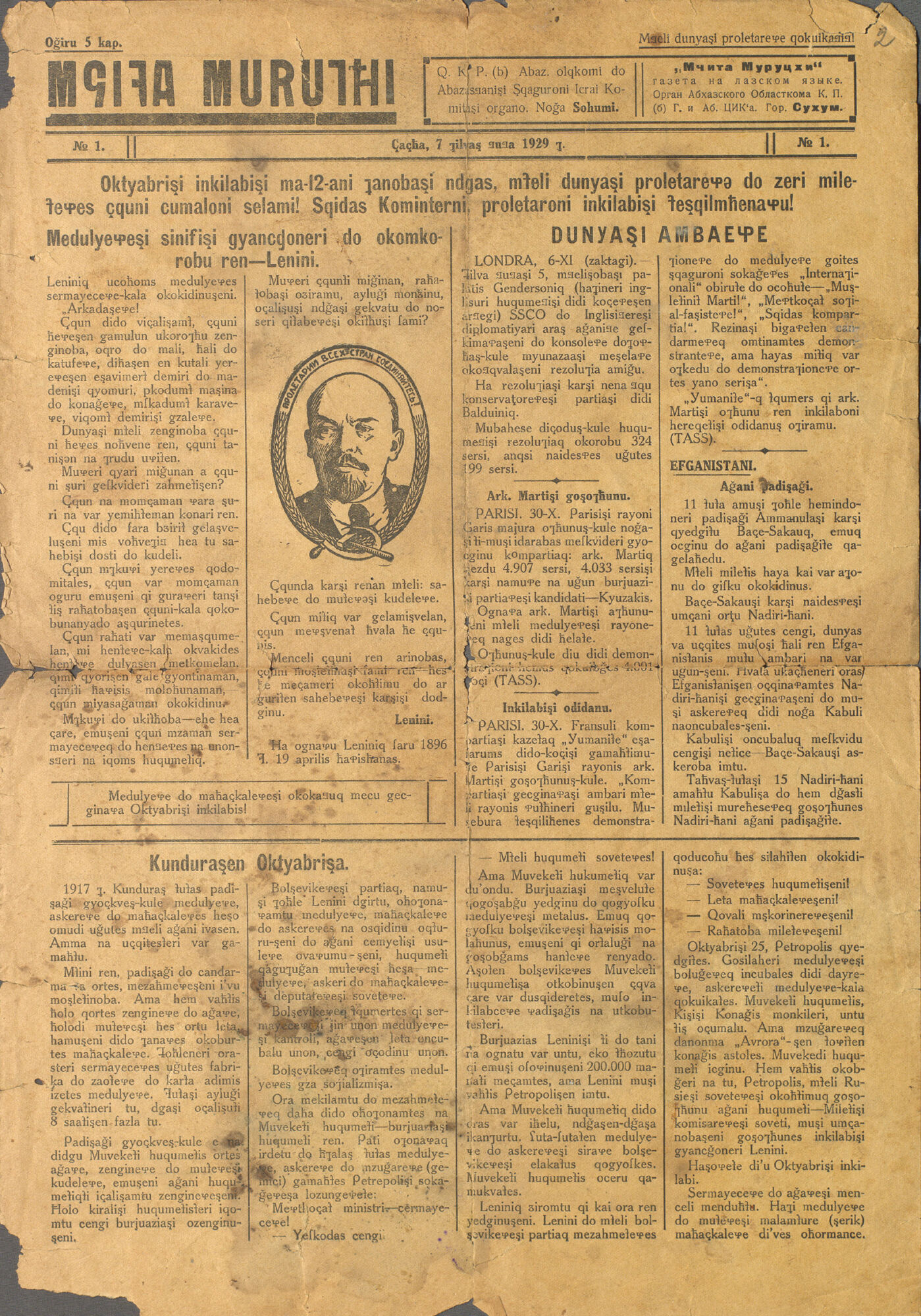
The First Laz Alphabet
Working within the Soviet Union’s early policies of promoting literacy among minority peoples, Tzitashi developed a Latin-based alphabet for the Laz language. This was part of a broader Soviet program to create writing systems for unwritten languages across the Caucasus and Central Asia.
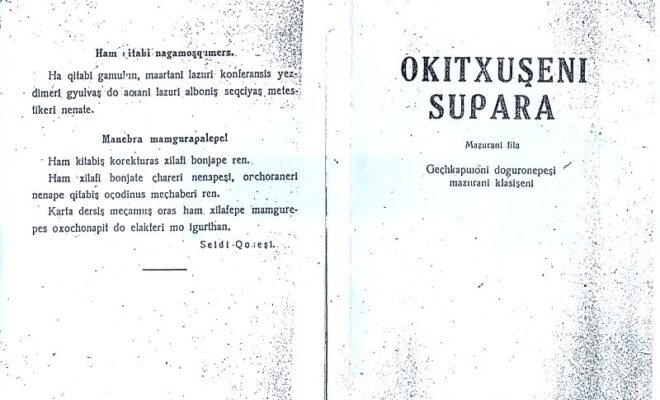
The alphabet was used for a brief period to publish educational materials and texts in Lazuri. However, in the late 1930s, Soviet language policies shifted toward Cyrillic-based alphabets, and Tzitashi’s Latin alphabet was abandoned.
Legacy
Despite the brevity of its use, Tzitashi’s alphabet represented a watershed moment: for the first time, the Laz language was written down in a systematic way. His work demonstrated that Lazuri could function as a literary language and laid the intellectual foundation for later alphabet development efforts, including Wolfgang Feurstein’s 1984 Latin alphabet that is still in use today.
A Soviet window for minority languages
Tzitashi’s work was made possible by a specific moment in Soviet policy. Through the 1920s the young Soviet state pursued korenizatsiya, an “indigenisation” programme that promoted local languages and literacy among the many peoples of the union. Scores of unwritten languages were given alphabets for the first time, and minority-language schools, newspapers and textbooks were funded by the state. For the Laz community living on the Soviet side of the border, in Abkhazia and Soviet Georgia, this opened a door that had never existed under Ottoman or Russian imperial rule.
Schoolbooks and a newspaper
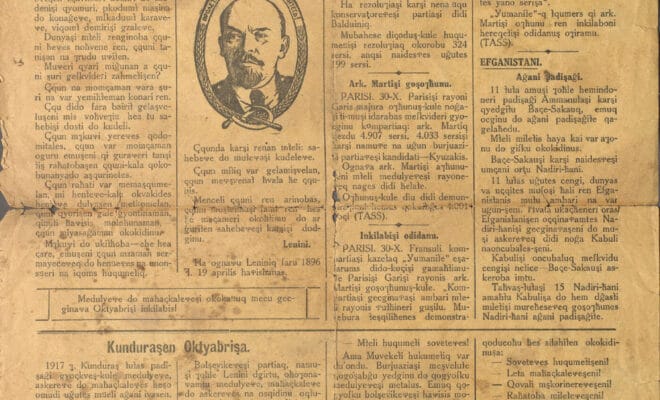
Tzitashi did not stop at the alphabet. He wrote and edited teaching material in Lazuri so the script could actually be used, and the language reached print through Mcita Murutskhi, the first Laz newspaper. For a few years, Laz children could be taught in their own language using books written in their own script, something that had never happened before and has not happened since on that scale.
The door closes
The opening was short-lived. From the mid-1930s Soviet nationality policy reversed: Latin-based alphabets were replaced, minority-language schooling was wound down, and the intellectuals who had led the earlier programmes became targets. Tzitashi was caught in the purges of the late 1930s and executed in 1938. The Laz schools closed, the newspaper ceased, and his alphabet fell out of use.
His achievement was not undone, however. Tzitashi had demonstrated that Lazuri could carry a written literature, and later efforts, above all Wolfgang Feurstein‘s Latin alphabet of 1984, built on the ground he broke.
Sources
- Laz alphabet on Wikipedia
- Laz language on Wikipedia
- Korenizatsiya, the Soviet indigenisation policy, on Wikipedia